We usually think of fiber-optic networks as infrastructure that carries data. But what if those same networks could also become research instruments for the universities and research institutes we connect?
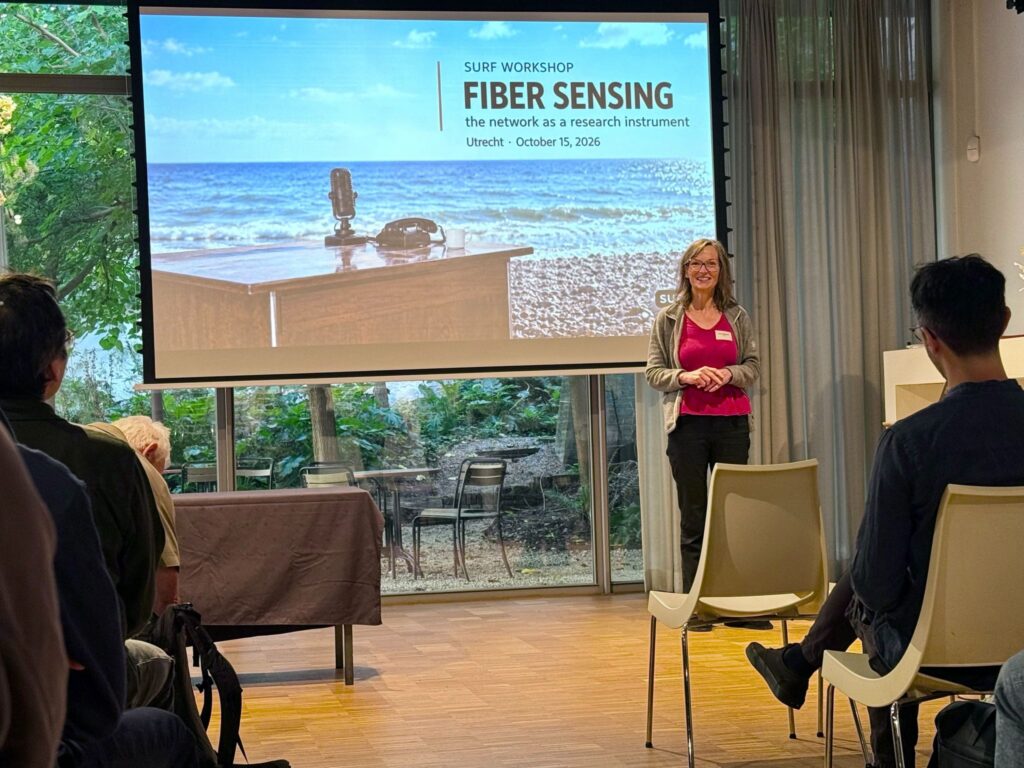
That was the idea behind SURF’s Fiber Sensing Workshop, held in Utrecht on October 15. We brought together researchers, network specialists, and technology partners to explore how existing fiber-optic infrastructure can be used for scientific observation, and what it would take to make this work in practice.
SURF has been exploring fiber-optic sensing for some time now, and the workshop was an opportunity to bring that work together with research already happening in the Netherlands and elsewhere. Community-building was a big part of the idea. We wanted people to exchange knowledge, get to know one another’s work, and see where more concrete collaboration might be possible.
The day opened with an update on fiber-optic sensing activities at SURF, including a technical demonstration and a look at the practical aspects of supporting research, from funding and partnerships to data and computing resources.
An international perspective came from Nicolas Celli of the Dublin Institute for Advanced Studies in Ireland. His excellent presentation took us through the use of telecommunications cables as geophysical sensors, covering everything from rain and storms to earthquakes, passing cars, and even quarry activity. It was a fascinating illustration of just how much information can be extracted from fiber infrastructure originally installed for a completely different purpose.
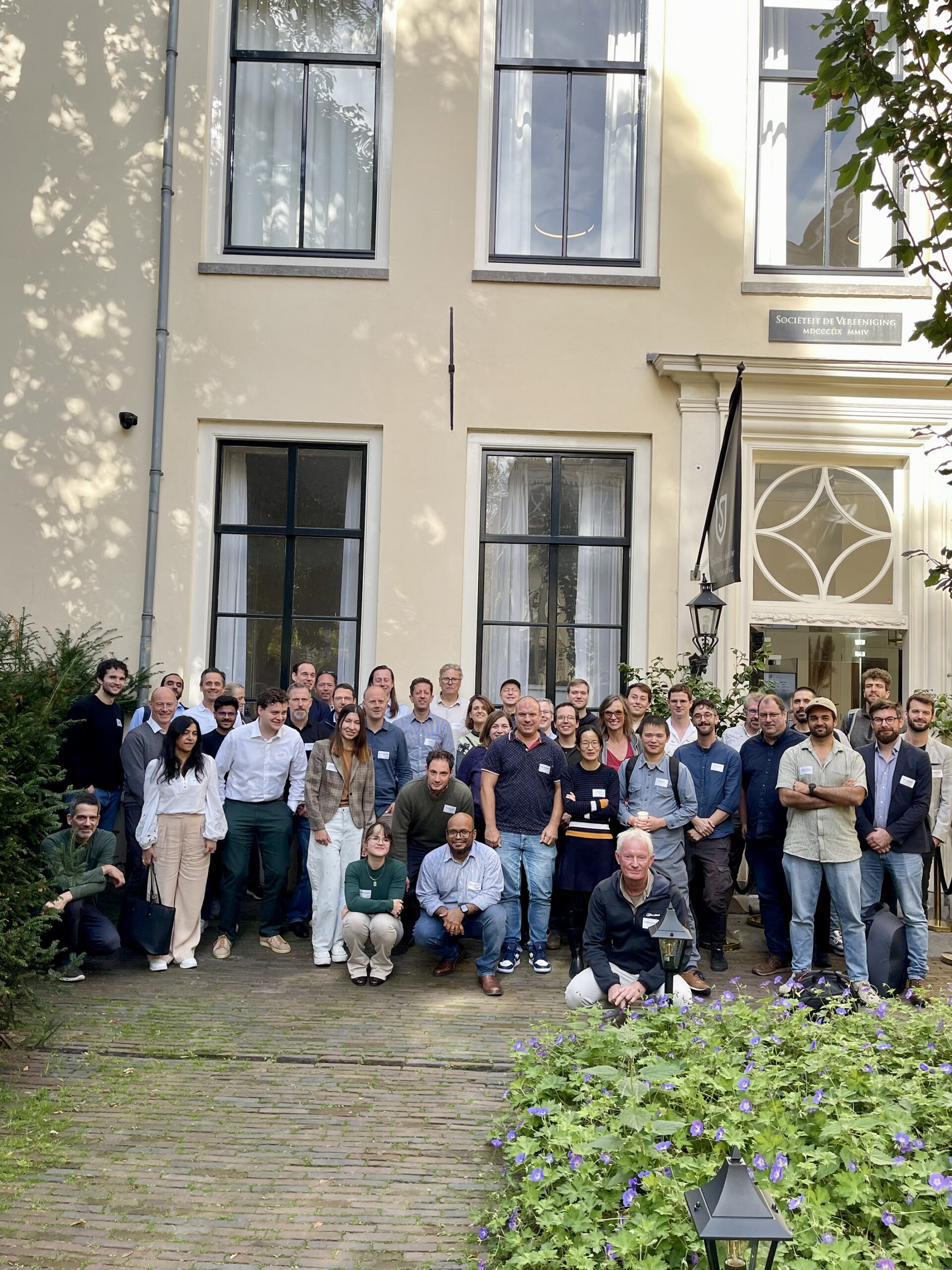
The research presentations that followed showed a similarly wide range of interests. And the mix of people in the room was impressive: researchers and specialists from TU Delft, Eindhoven University of Technology, the University of Twente, Utrecht University, Vrije Universiteit Amsterdam, Wageningen University & Research, ArtEZ, TNO, Deltares, and KNMI. We also had participants from ProRail, Alliander, and the Dutch police, along with international colleagues from GEOMAR, Jisc, and GÉANT. Quite a diverse group, with research interests ranging from seismic monitoring and urban subsurface investigations to noise in the North Sea, railway infrastructure, geothermal energy, and water safety.
What I found particularly interesting was seeing how differently researchers can approach the same sensing data, each with their own questions, methods, and objectives. Measurements collected along a fiber-optic cable might contain information that is useful to several research disciplines. It’s an intriguing prospect, especially when you consider the opportunities for sharing data and making more effective use of existing infrastructure.
And that was perhaps what made this workshop so worthwhile. The presentations were interesting in their own right, but the conversations they sparked were just as valuable. There was no shortage of questions, ideas, or enthusiasm in the room. People were clearly interested in what others were doing, and in finding out where their own research or expertise might fit in. By the end of the day, we had moved well beyond introductions and exchanging information. New connections had been made, possible areas of collaboration had emerged, and there was a shared interest in taking things further.
For SURF, that’s an encouraging outcome. Our networks have been supporting research for years, mostly behind the scenes, by connecting institutions and carrying their data. Fiber sensing offers an interesting new possibility: the very infrastructure we’ve built to connect our members could also help them generate research data, potentially serving several different disciplines at once. I’m looking forward to seeing which of the conversations started in Utrecht will turn into actual collaborations.
Interested in learning more about fiber sensing at SURF, have an idea for collaboration, or want to get involved? Feel free to reach out to me at karin.wessel@surf.nl