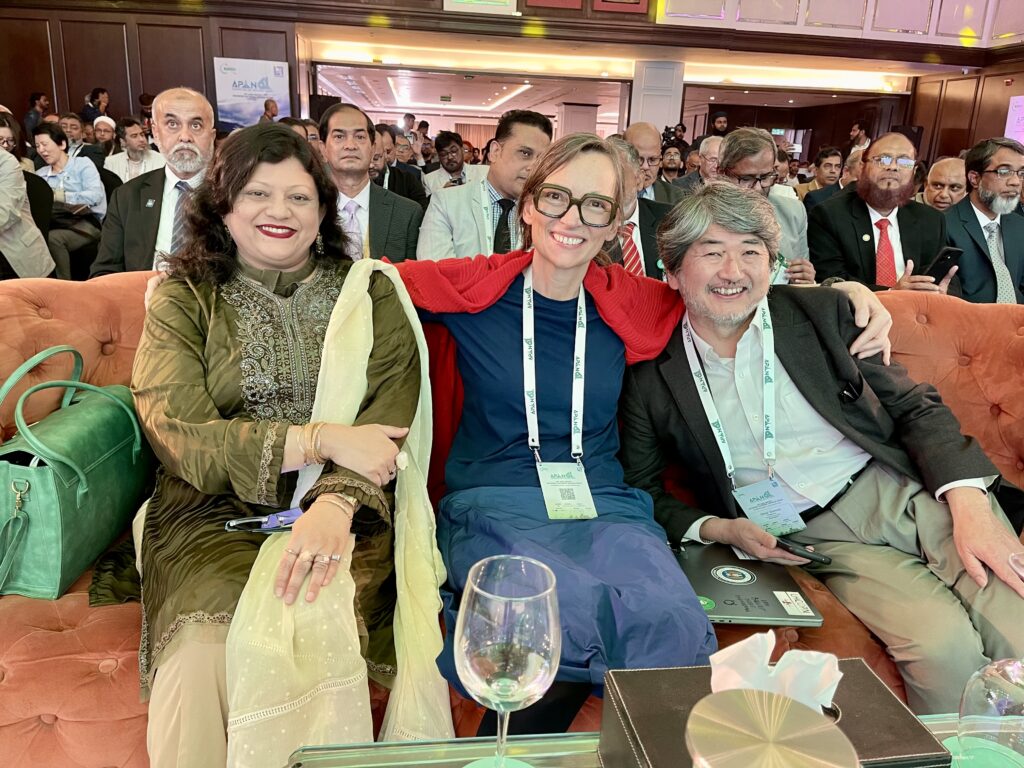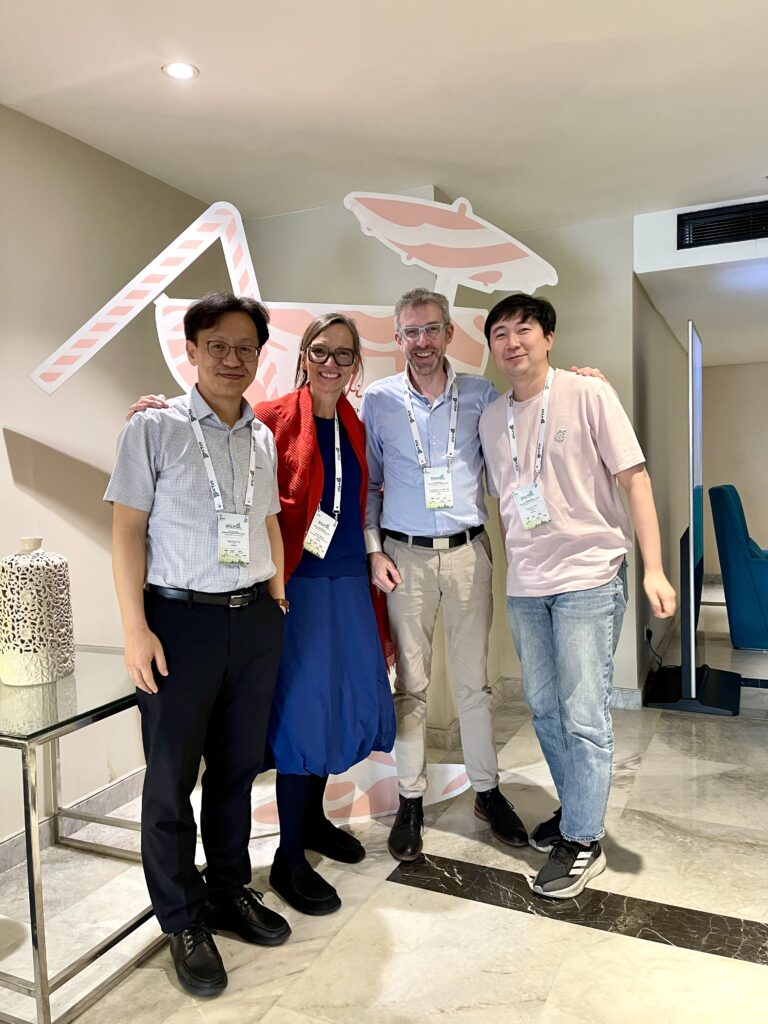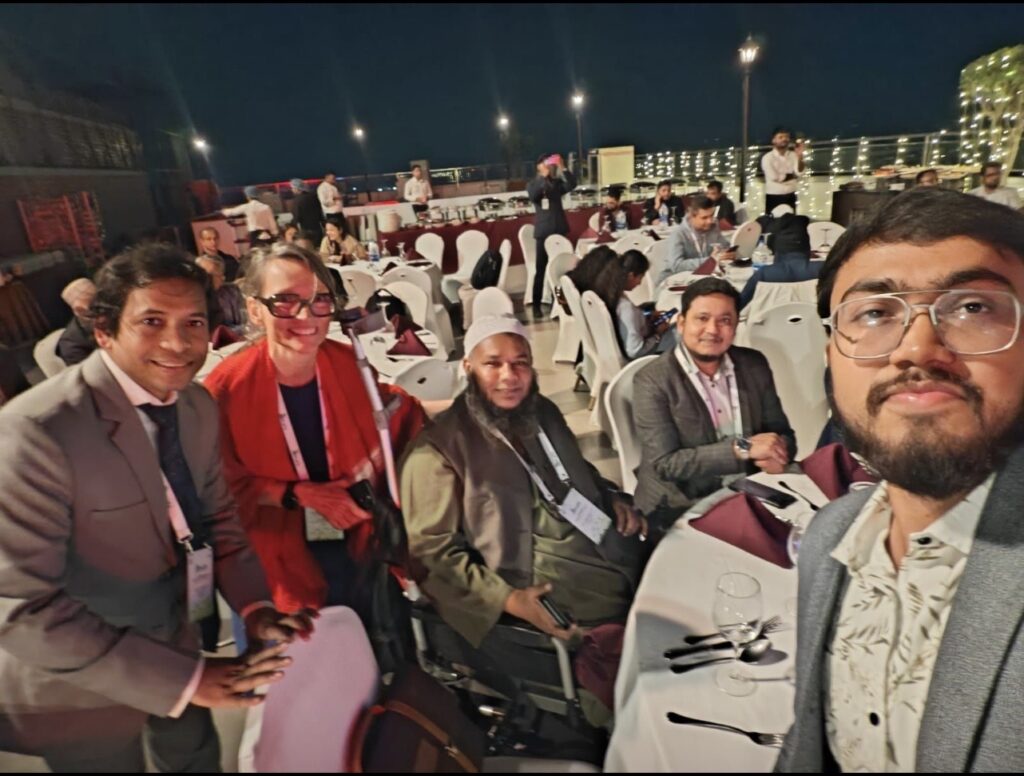

Last week, Alexander and I traveled to Dhaka, Bangladesh, for APAN61 (APAN stands for Asia-Pacific Advanced Network). These types of conferences are often viewed from a technical standards and backbone capacity perspective, but our time in Dhaka proved that the most critical infrastructure we build isn’t made of fiber—it’s made of people.
A Federated Foundation for Global Science
I was invited by APAN to deliver a keynote titled “Staying Connected: A Federated, Open Foundation for Global Research & Education Collaboration.” Giving a keynote was exciting for me – in a good way – and a personal milestone. But the real value lay in the message: how we, as a global community, can ensure that research and education aren’t siloed by geography, geopolitics, or other obstacles. For that purpose, addressing both the why and the how of the need for a federated global infrastructure. And it was a reminder that our work within NRENs (both at SURF and abroad) feeds into a much larger, global engine of collaboration and progress for Science & Education.
Besides the keynote, I also gave an additional presentation representing SURF in a Special Interest Group (SIG) on Science Engagement. At SURF, we often talk about science engagement and how to improve our efforts in that respect but seeing it in practice and discussing with other NRENs how they do it during APAN was very stimulating and useful.
Specific Takeaways from the Field
Beyond the podium, four specific observations stood out to me:
- Infrastructure in Practice: The Bangladesh Research & Education Network (BdREN) has successfully implemented eduroam in all national airports. Coming from the Netherlands, seeing this level of user-focused service in action was impressive. It’s a standard of accessibility we should all be aiming for. Schiphol & Nationale Spoorwegen, bring it on!
- High-Level Science Engagement: I spent time with researchers in oncology and molecular biology. The sophistication of their work is a clear signal: they are driving serious scientific inquiry that requires the kind of international research network connectivity we provide.
- Logistical Excellence: Organizing a conference of this scale in a city as complex as Dhaka—a metropolis of over 25 million people—is a massive undertaking. To put it in perspective: the population density there is nearly ten times that of Amsterdam. Moving dozens of international guests through that kind of environment requires serious planning. The hospitality and flawless execution by the BdREN team really showcased the professionalism and dedication of our partner NRENs in the region.
- The “8th Layer” of the OSI Model: Some of you know that when it comes to networking, I’m a Layer 0-3 kinda girl—they don’t call me the “Dark Fiber Lady” for nothing —but this week was all about the human 8th layer. Whether it was reconnecting with old friends & partners, establishing new partnerships & perspectives on future collaboration, or learning about local history like the Shaheed Minar, these face-to-face meetings are what make the global R&E collaboration possible.
Looking Ahead
Collaborating with the Asia-Pacific region isn’t just a “nice-to-have” for SURF; it is essential for a functional and resilient global research ecosystem. We’re bringing back more than just notes—we’re bringing back renewed partnerships, connectivity to enable global research opportunities for our SURF members, and a fresh perspective on what it means to be a partner in this international community.
A special thanks to Mohammad Tawrit and the entire BdREN team for their hospitality and for showing us the future of R&E in Asia.